Heaps of uncollected refuse continue to blight the beauty of Nigeria's Federal Capital Territory (FCT), posing a severe threat to public health. These unsightly wastes are accumulating on streets, in markets, and along roads, a problem exacerbated by a lack of public bins and inadequate waste collection services. This disturbing environmental menace not only contributes to public health risks, such as disease outbreaks and environmental pollution, but also tarnishes the federal capital city’s image in the long run.
Residents and visitors alike express growing concern over the pervasive issue of indiscriminate waste dumps and escalating refuse piles along major thoroughfares, coupled with apparent official negligence in their evacuation. Across key districts including Wuse, Utako, Garki, Gwarinpa, Jabi, Life Camp, and Nyanya, mountains of refuse now dominate the urban landscape.
The Abuja Waste Crisis: A City Under Siege
The putrid stench of decomposing waste hangs heavy in the air, while scavengers and stray animals freely roam around these burgeoning dumpsites. What was once heralded as a pristine, meticulously planned city has, for many residents, transformed into a visual and environmental nightmare. "Everywhere you turn, you see piles of refuse that have not been collected for weeks,” lamented Oritoke Olalekan, a Wuse resident. “The Abuja Environmental Protection Board (AEPB) seems to have gone to sleep. This is their main duty to keep our streets clean, but the board has failed.”
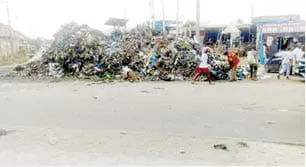
Motorists and traders echo similar frustrations. Rafiu Jimoh-Adebukola, a taxi driver in Utako, highlighted both the health and safety hazards. “When the refuse piles up, people set it on fire to reduce the smell. The smoke blocks our visibility and makes breathing difficult. Sometimes, hoodlums hide around these dumpsites and snatch people’s phones during traffic,” he explained. At the Life Camp junction and Nyanya interchange, residents report that refuse heaps have become permanent fixtures, attracting scavengers (known as “baban bola”) who, while picking recyclables, often leave more filth behind. Residents also claim this practice has opened the door for criminal activities. “We have seen cases where these scavengers engage in theft or vandalism. When they are caught, the police release them after collecting bribes,” alleged Taye Ayedero, another motorist, adding, “We are tired of complaining; the government needs to take this seriously.” The situation is equally dire in Wuye, Garki, and parts of the Matama districts, where Esther Ishaya, a Wuye resident, noted a refuse heap on her street had remained untouched for months.
The situation is particularly severe in Gwarinpa District, where business owners and motorists are decrying the proliferation of refuse heaps consuming major roads, especially along 3rd Avenue Road, the Works and Housing entrance, and near Kado-Bimko market. Business operators lament the unpleasant environment for their customers, leading to significant losses. Fidelis Oketa, a shop owner, described the "wicked stench" as poisonous and hazardous, causing customers to flee. Blessing Daniel, a restaurant manager, claimed she lost over 70% of her clientele due to the problem. Commercial driver Jamilu Sulaiman reported that motorists now actively avoid certain roads due to the overwhelming refuse. Malam Ibrahim Isiaku, the village head of Kado-Bimko, revealed that the contract for refuse evacuation in his area had expired, forcing residents and business owners to self-fund waste removal.
Unpacking the Roots of Failure: Why Waste Management Collapsed
Public health experts warn that poor waste management's consequences extend far beyond aesthetics. Dr. Onaja Sunday, an environmental health specialist, explained that decomposing waste emits toxic gases like methane and ammonia, which can cause respiratory distress and weaken the immune system. "When refuse is left to rot in the open, it becomes a breeding ground for flies, rodents and mosquitoes that transmit diseases like cholera, typhoid and malaria. Communities close to these dumpsites are particularly at risk,” she stated. She emphasized the urgent need for intervention, noting that Abuja's rapidly growing population has dramatically increased daily waste generation, far exceeding the existing collection system's capacity.
Town planner Barnabas Atiyaye, a fellow of the Nigerian Institute of Town Planners, attributes Abuja’s persistent waste crisis to rapid urban growth, weak institutional coordination, and insufficient infrastructure. He highlighted "massive population expansion" in the Abuja Municipal Area Council (AMAC) and satellite towns, leading to higher waste volumes. Despite government efforts, waste collection and disposal fall short, resulting in irregular services, illegal dumping, and open burning across many residential areas and markets. Atiyaye identified five core challenges: inadequate collection and disposal infrastructure (limited bins, trucks, poorly maintained landfills); weak institutional coordination due to overlapping roles among the AEPB, area councils, and private operators; low public awareness leading to indiscriminate dumping; limited recycling and waste-to-resource initiatives; and poor data and planning, hindering the integration of waste management into urban frameworks.
Towards a Cleaner Capital: Wike's New Vision and Community Calls
To tackle this environmental menace, Atiyaye stressed the need for urgent and comprehensive reform, advocating for institutional strengthening, technological innovation, and public participation. His recommendations include empowering the AEPB with clear authority, expanding waste collection coverage through private companies, upgrading landfills to engineered sanitary sites, promoting recycling and composting, launching public awareness campaigns, and exploring waste-to-energy initiatives. He believes these measures could achieve a cleaner environment, create jobs, and align with UN Sustainable Development Goals, transforming waste from a nuisance into an economic resource.
The House of Representatives has also intervened, resolving to establish an ad hoc committee to thoroughly investigate the escalating waste management crisis in the FCT. This legislative action addresses concerns that Abuja has devolved into a public health and security emergency zone. Representative Umar Shehu Ajilo, who moved the motion, decried the alarming state of sanitation, characterized by indiscriminate refuse dumping, blocked drainage systems, and non-functional streetlights. He warned that the combined effect of waste accumulation and pervasive darkness creates a "dual crisis" threatening both public health and security, breeding disease vectors and contaminating air and water.
Responding to mounting complaints, FCT Minister Nyesom Wike has vowed to tackle the problem head-on. Following an FCT Executive Committee Meeting, the Coordinator of the Abuja Municipal Management Council (AMMC), Chief Felix Amechi Obuah, announced the approval of a new waste management regime starting Monday, November 17, 2025. This includes new contractors for waste collection and management, procurement of basic treatment plants, and maintenance of supervisory utility vehicles. Chief Obuah expressed optimism for a cleaner Abuja. Additionally, N111,913,176 was released for emergency waste evacuation in the Dogon Gada community. The Minister attributed past lapses to expired waste contracts, promising that only competent contractors with the necessary equipment and experience would be engaged moving forward. He appealed for residents' patience, assuring them of the administration's determination to restore cleanliness.
In further infrastructure news, the FCT Executive Council approved the extension of service contracts for the Jabi pump station, a crucial sewage treatment facility. This decision is vital for preventing environmental contamination and improving waste treatment. Despite these governmental assurances, many residents remain skeptical, stating they will only believe when they see concrete results. Osaya Adamu, a long-time FCT resident, hopes Wike's administration can clean up and sustain the city's cleanliness, allowing Abuja to regain its pride. Others, like Garki Market trader Ngozi Nwafor, advocate for greater community involvement through waste management committees to monitor areas and hold contractors accountable. Environmental activists, such as Hamza Sule of the Green City Initiative, emphasize that citizen education is paramount; without a change in public behavior, the cycle of pollution will persist.