Currently, Biden is relying on an executive order from 2006 to sanction Belarus in the wake of its provocative grounding of the Ryanair jet. But legislators in both parties want the president to sign a new, up-to-date executive order and consider imposing human-rights sanctions on Belarus using existing authorities from Congress, moves that would avert the need for a new sanctions bill.
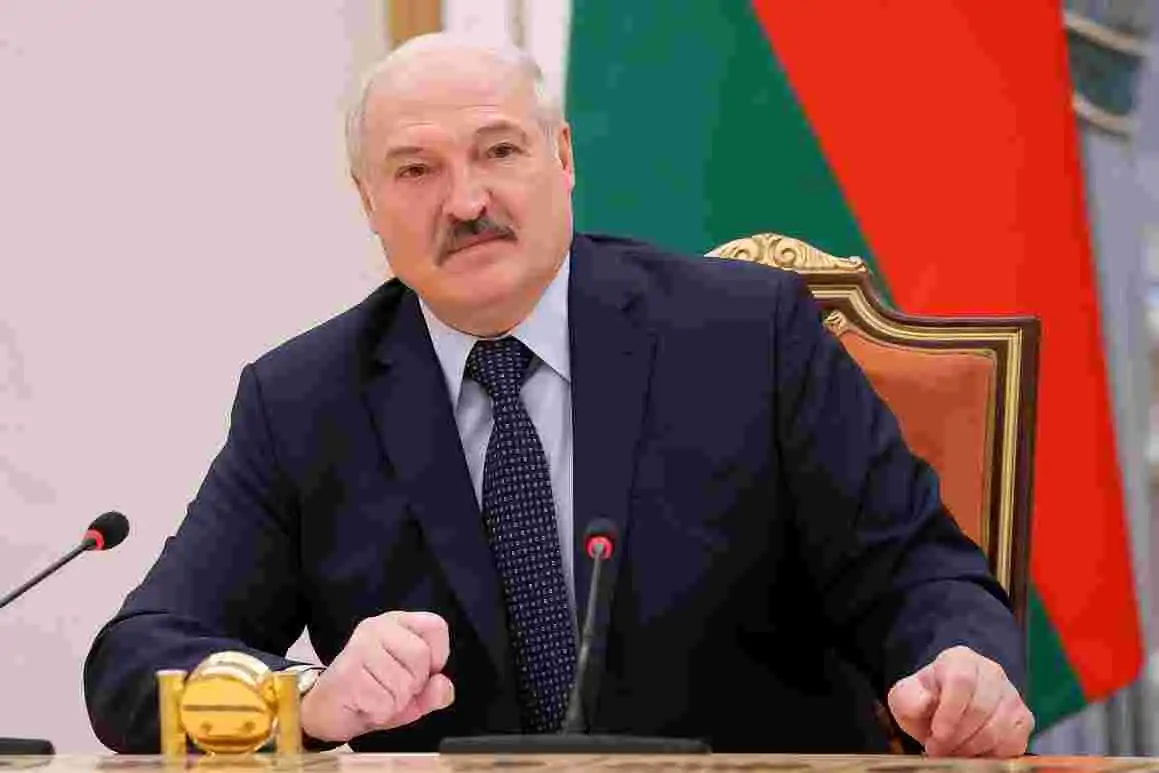
Alexander Lukashenko speaks at a meeting in Minsk, Belarus. | Sergei Sheleg/BelTA Pool Photo via AP
“The more we wait, the more impunity takes place,” warned Sen. Bob Menendez (D-N.J.), the chair of the Foreign Relations panel. “It's time to increase the pressure.”
The Biden administration has already reimposed sanctions on several Belarusian entities and urged Americans not to travel to Belarus. It also recently directed U.S. airlines to “exercise extreme caution” when flying in the country’s airspace. But Menendez said those actions “did little to change Lukashenko's calculus.” For example, Putin hosted Lukashenko on the Russian president’s yacht the previous week, a sign that the Belarusian leader is continuing to embrace Moscow’s influence.
Senators are privately skeptical of the Biden administration’s commitment to cracking down on Lukashenko, a key confidant of the Russian president. Those doubters on Capitol Hill point to the administration's recent resistance to exacting harsher penalties on Moscow and its allies over the construction of a Russia-to-Germany gas pipeline.
Nonetheless, Fisher’s vow was a welcome one for legislators who have been pushing for a more aggressive response.
The committee also heard powerful testimony on Wednesday from Belarusian opposition leader Sviatlana Tsikhanouskaya. She has been living in exile in Lithuania ever since August’s presidential election, which the international community believes she won.
Tsikhanouskaya called Lukashenko a “threat to international peace and security” and said the 66-year-old, who's been in power since 1994, is turning Belarus into “the North Korea of Europe.” The opposition leader urged the U.S. to impose biting sanctions on Belarus’ foreign funders in addition to its banking and oil sectors, which she argued would make a difference inside the country, where political opponents are being jailed and the government is receiving strong support from the Kremlin.
“What’s happening in Belarus is not about geopolitics. It’s our fight against dictatorship,” Tsikhanouskaya said. “It’s not against other countries. It’s against a regime in our country.”
Apart from sanctions, which can sometimes be ineffective, senators called on the Biden administration to work to expose Lukashenko’s financial holdings and his ties to the Kremlin, which can threaten his grip on power. Sen. Chris Murphy (D-Conn.) said the Office of Foreign Assets Control, the “perpetually under-funded” agency responsible for enforcing U.S. sanctions, “can do a good job of exposing the way in which these dictators abroad hide their money.”
Murphy, along with Sens. Jeanne Shaheen (D-N.H.) and Rob Portman (R-Ohio), met with Tsikhanouskaya the previous week in Lithuania during a swing through Eastern Europe. Shaheen noted that Lithuania and Poland, for example, are giving Belarusian dissidents safe-harbor in their countries, adding that the U.S. should coordinate and support those efforts.
Fisher's testimony on Wednesday painted a stark portrait of Lukashenko's fealty to Putin. The Belarusian leader has ceded so much of his own sovereignty to Putin that he no longer has control over Moscow’s military build-up in his country, she told senators.
“Russia continues to provide support to a leader whose only motivation at this point is to maintain his grip on power,” added Fisher, who has not been able to report to her post in Minsk because the Belarusian government will not grant her a visa.
Biden departed for Europe earlier Wednesday for his first overseas trip as president, with an extensive agenda that includes a summit with Putin. Legislators have been calling on the president to press his Russian counterpart on a number of issues, including Moscow’s incursions into Eastern Europe and its efforts to undermine democratic governments in the region.