 GETTY
GETTY
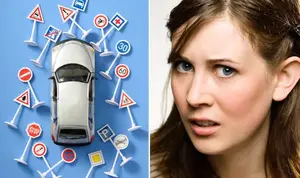
The majority of British drivers do not know the meaning of road signs
Aviva Insurance questioned over 1,500 motorists and found that only 10% understood the correct meaning of double yellow lines, while signs such as ‘Pedestrians in the road ahead’ and ‘no buses’ were only recognised by 45% of drivers, in a multiple choice test.
 GETTY
GETTY
One in four drivers did not know the meaning of the sign 'no through road'
Signs for ‘no motor vehicles’ and ‘no stopping’ weren’t that much better known, being correctly identified by just 59% and 62% motorists respectively.
The average score for the respondents was eight correct answers from 15 questions, with just two motorists getting all 15 questions correct.
Away from road signs, levels of knowledge weren’t any better. Only two-thirds of drivers could correctly identify 60mph as the national speed limit for single-carriageway A-roads, while 10% of drivers didn’t know that 70mph was the maximum speed for motorways and dual carriageways.
 GETTY
GETTY
Despite the findings 80% of drivers consider themselves safe
Other findings include:
- 20% of drivers didn’t recognise the sign meaning ‘national speed limit applies’.
- 35% couldn’t correctly identify the ‘one way traffic’ sign.
- 25% didn’t know the meaning of the sign meaning ‘no through road’, while 22% of drivers believing the sign indicated a ‘T’ junction.
- Only 30% knew the stopping distance at 30mph.
 GETTY
GETTY
Motorists can test their knowledge in an online test
Despite this lack of knowledge, 80% of drivers considered themselves to be safe drivers. The research was undertaken by Aviva as part of an awareness campaign around road safety, in an attempt to encourage people to think about their driving habits.
The insurer also has a downloadable telematics-style app, Aviva Drive, which can test how safely they drive, based on cornering, braking and accelerating.
There’s also an online quiz to test motorists’ knowledge of road safety: so far, after more than 40,000 people have taken the quiz, only 8% of people have got 10 out of 10 correct.
- Daily Express