The Department for Work and Pensions (DWP) has confirmed that some of its online services have been taken offline after its systems were targeted by a "cyber incident."
The governmental department, responsible for managing benefit payments and state pensions, announced that its website was brought down after "identifying a cyber incident affecting our systems."
However, the DWP reassured the public that regular pension and benefit payments would not be impacted and would be disbursed as scheduled.
In an official statement, the DWP declared: "We are working closely with the National Cyber Security Centre and Government Cyber Coordination Centre to investigate and to bring services back online as quickly as possible and to minimise any disruption."
The statement continued: "Regular benefit and pension payments are not affected and will be paid as normal. If an online service you need is unavailable, please try again later. As always, we will never message you to ask for bank details or ask you to click on links."
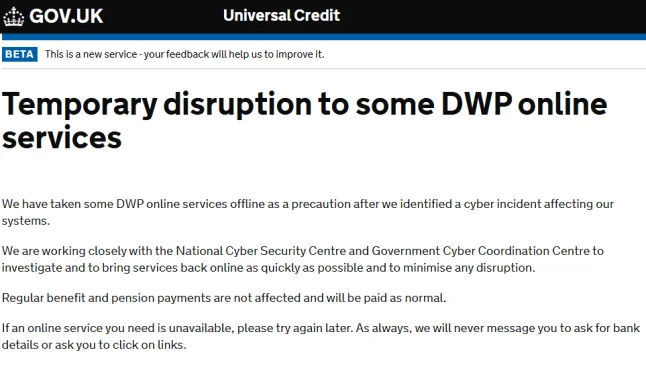
Among the services reportedly affected are the Universal Credit website, PIP applications, the pension credit checker, and the 'Tell Us Once' service.
Lloyds Banking App Experiences Brief Outage
Concurrently, some customers of Lloyds and Bank of Scotland faced difficulties accessing their mobile banking apps today. Problem reports surged on DownDetector, a platform that monitors website and app outages.
Metro understands that while some customers were entirely unable to access the app, receiving an error message, others experienced slow service, with some users reporting no issues whatsoever.
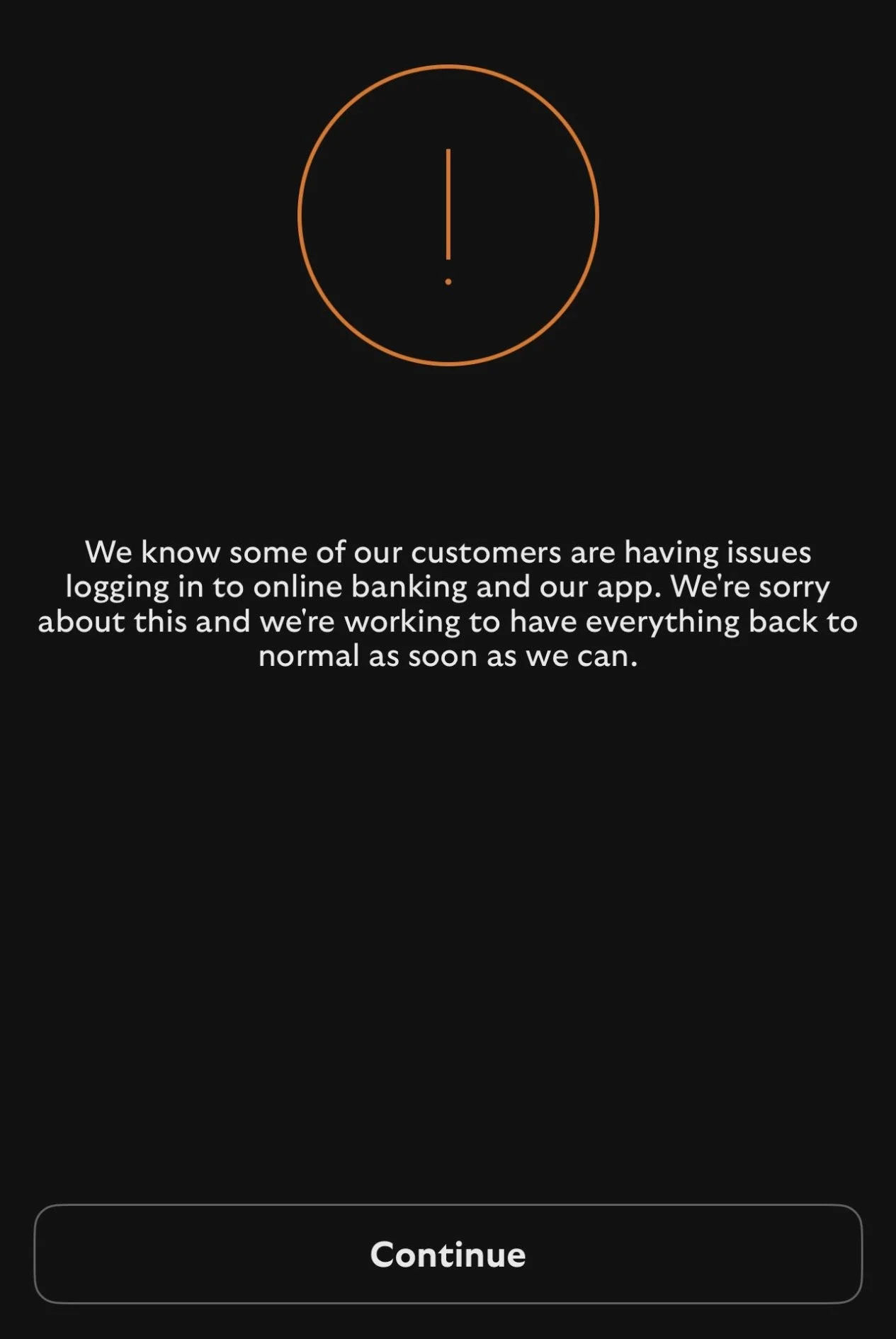
A spokesperson for Lloyds Banking Group informed Metro: "We’re aware some customers are having difficulty accessing the app this morning. We’re sorry for the inconvenience and are working to get things back to normal as quickly as possible." The bank also confirmed that Halifax, which migrated to Lloyds last month as part of a rebranding initiative, was also affected.
Heightened Cyber Security Concerns
These recent glitches occur amid heightened concerns for cyber security, following several high-profile incidents. Earlier this month, a global Microsoft system meltdown severely impacted critical services for GPs, schools, and police forces.
During that disruption, users were urged to exercise extreme vigilance, as hackers are known to exploit such confusion, often through phishing emails designed to solicit personal details.
The UK government recently launched a major new campaign, encouraging citizens to prepare for various disasters, including those triggered by extreme weather events, terrorism, and cyber attacks. Defence Secretary Wes Streeting stated that the new guidance aims to help people implement "simple steps" to prepare for a range of threats.
Beverley Griffiths, a senior lecturer in security and resilience at Buckinghamshire New University, emphasised the importance of cyber preparedness and resilience as an integral part of everyone's education, commenting after the Microsoft system glitch. She told Metro: "We live in a very interconnected world, as we have seen in the last few years with various things affecting us, from wars to cyber incidents, and we are globally impacted. But as the government advice is coming out, we need to prepare ourselves and ask those questions like what if this happens, what can I do either for my work, for my customers, or for myself and my family."
Meanwhile, in the United States, hackers are suspected of recently infiltrating Cloud One, the platform utilised by the country’s Air Force. Reuters reported, citing informed sources, that the suspected intrusion was identified during a system upgrade within the past month. Attackers allegedly exploited a software vulnerability to gain system management-level access, which theoretically could have allowed them to monitor the status of military aircraft. It remains unconfirmed whether the hackers proceeded to do so.