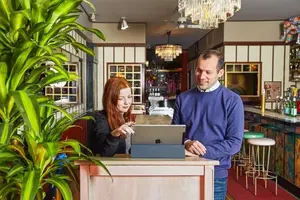
Reserve thinks that the restaurant reservation process is broken and has doubled down on fixing it with the launch of Reserve for Restaurants. This table management system offers restauranteurs more control over key elements such as seating, scheduling reservations, and managing wait times. It even includes a customer database feature. The idea is to streamline the process so that diners receive a better experience “from start to finish.”
Greg Hong, Reserve’s CEO, explained Reserve for Restaurants as “ultimately giving control back to our restaurant partners, by aligning incentives with [them] and [providing tools] to book tables at restaurants more smartly.”
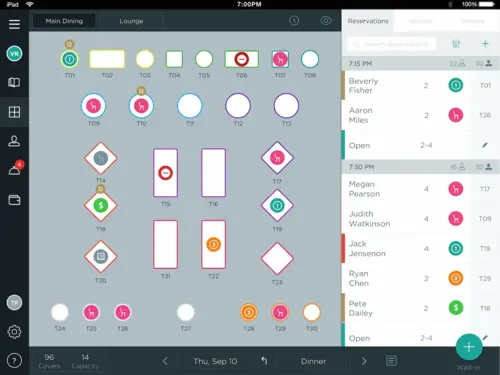
Above: Screen of a restaurant layout on Reserve’s platform.
Image Credit: Reserve
For $99 per month per location, restaurants can install a platform that appear similar to OpenTable’s platform, but features some marked differences. Beyond offering wait list management, reservation capabilities, and analytics, Reserve for Restaurants does away with any additional costs — such as cover fees for reservations made through the system, a potential saving of what Reserve said could be $0.25 to $7 per person.
Peter Esmond, the company’s head of restaurant product, claimed that the food technology ecosystem is “so fragmented and not transparent for guests. The restaurant knows that their 7 o’clock and 8 o’clock tables are taken, so there’s no reason to put that inventory online to pay a fee per person. Any dollar you can save goes to the bottom line.” He believes it’s time to change how the entire ecosystem works.
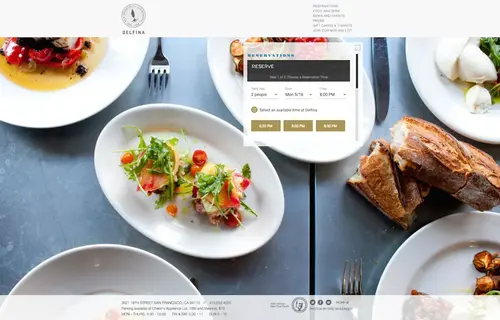
Above: Guests can book with Reserve from a restaurant’s own website
Image Credit: Reserve
Another distinguishing feature is its Salesforce-like capabilities, which give restaurants the ability to keep better data on their loyal and frequent diners. The information is not provided through data that customers provide Reserve’s system directly, but through more organic means. Restaurants can track things like visit history, what table diners prefer, favorite drinks, allergies they may have, and other preferences. It’s all centered around providing a more hospitable experience.
The backbone of this customer relationship management service comes through Reserve’s acquisition of Esmond’s company Set for Service last year.
While many areas of the restaurant industry have undergone innovation over the past few years, one thing that remained stagnant was reservation systems. “No one was addressing where the void was,” Esmond said. It’s his belief that, while there are plenty of OpenTable competitors, until now none offered a differential change. Both he and Hong think their new platform can change things.
“It’s a matter of focus right now,” Hong remarked. “It’s about taking a user-focused approach to meet the needs of restauranteurs, something Reserve has been hyper-sensitive to.”
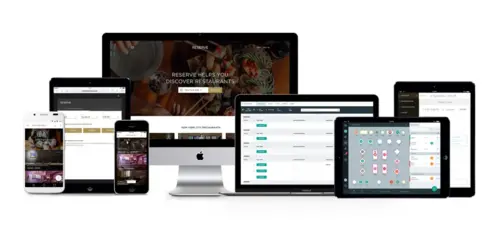
Above: Reserve ecosystem – Reserve concierge app, website widget, Reserve.com website
Image Credit: Reserve
At launch, Reserve has kept its restaurant platform closed to third-party developers, but it does have plans to eventually open it up to integrations, allowing restaurants to sync up data across different technology platforms (perhaps like Square’s point-of-sale system). Hong cautioned that this’ll take some time because he “wants to be sure that we’re sharing data in a thoughtful way” while also “maintaining the privacy of diners in the restaurant, as well.”
Although there’s a network of 500 restaurants across the U.S. currently using a Reserve product, only 150 have implemented Reserve for Restaurants. The company’s “digital concierge” option is still available, meaning that restaurants aren’t forced to use Reserve’s platform.
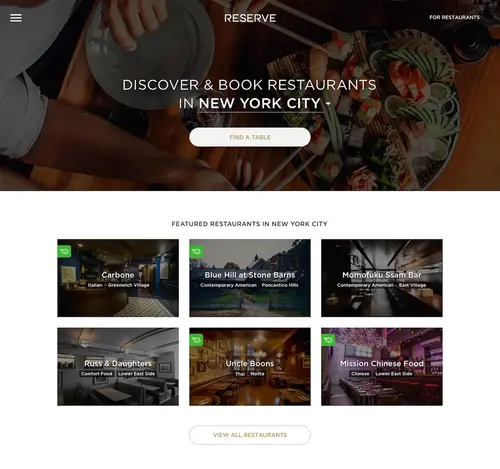
Above: Reserve.com
Image Credit: Reserve
To open up more opportunities to book reservations, the company has also launched a new consumer-facing website for the desktop. It allows you to book a table at almost any of the 500 participating restaurants. However, Hong said that the mobile payment capability isn’t available yet and attributed the delay to technical constraints that are being resolved.
What this means is that once you’ve finished your meal, the waiter will bring your check, whereas if you arrange the reservation through Reserve’s mobile app, the payment is processed within the app itself. We’re told that over time, the web interface and mobile app will start to be more on par with each other. Additionally, the company plans on adding more Instant Booking availability to its service, as well as growing the number of restaurants on its platform.
The creation of a consumer website is aimed at those who prefer to browse for restaurants right on their desktop with a larger screen. Reserve said that it’ll be helpful in providing a better experience to users interested in learning about venues, seeing food photos, and more. “It makes it easier to go out and book your dining reservations,” Hong explained.
Reserve for Restaurants and the company’s consumer website are both part of an effort to establish what Hong called a “united platform.” He shared that “From day one, the idea was to build out an ecosystem, taking care of a diner from when they were hungry to the end of the meal where they’d provide feedback.” Since its incubation through startup studio Expa, Reserve had been consumer-facing, but now it’s expanding its focus to “connect the pipes on the restaurant side more completely.”
.