Norway-based technology company Opera Software is introducing a free virtual private network (VPN) feature to its desktop browser, making it the first of the major browser operators to build a VPN directly into the software. Today’s news comes a little more than a month after Opera unveiled a built-in ad-blocker for the browser.
The launch is the result of Opera’s acquisition of North American VPN company SurfEasy last March. The two companies kinda integrated back in September with version 32 of the Opera browser, but users were prompted to install the SurfEasy extension. It’s also worth noting here that other third-party providers, such as perennial favorite TunnelBear, have long provided VPN add-ons for Opera. But by making it a default feature, Opera goes some way toward making privacy a core facet of the browser.
The feature is only available in the Opera developer incarnation for now, and it features 256-bit encryption. To activate it, you have to click the “O” menu, hit “Settings,” choose “Privacy & Security,” and then tick “Enable VPN.”
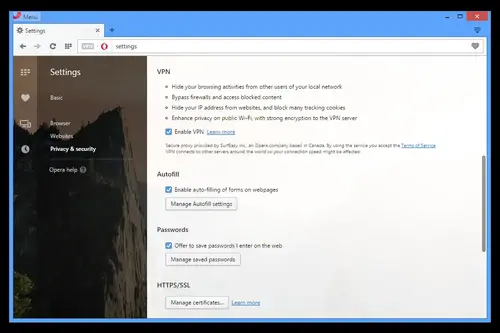
Above: Opera VPN
Once activated, you’ll note a little padlock icon in the URL field, which you can click to change various settings. You can elect to be in three “virtual locations” — the U.S., Canada, or Germany, though more will be added shortly.
This means that regardless of where you are in the world, websites you visit will serve up content based on the location you stipulate. This may or may not work to access Netflix’s U.S. library, as the video-streaming giant has been pushing to block VPNs in recent times.
More generally, Opera’s built-in VPN will be able to shield your true IP address, unblock firewalls or geo-restricted content, and let you enjoy a more private online existence.
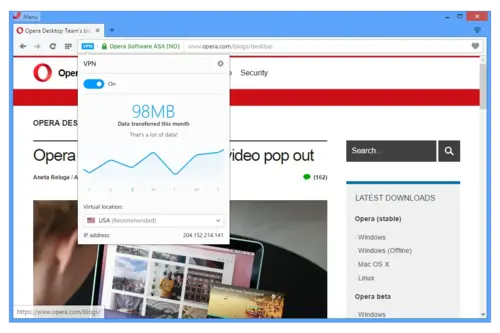
Above: Opera VPN
It’s also worth noting here that Opera’s VPN client comes with unlimited data usage — most of the popular VPN products on the market offer a limited amount of data to hook you in before charging a fee to unlock unlimited access.
“Everyone deserves to be private online if they want to be,” said Krystian Kolondra, senior vice president at Opera. “By adding a free, unlimited VPN directly into the browser, no additional download or extensions from an unknown third-party provider are necessary. So, today, our Opera desktop users get a handy way to boost their online privacy, as well as easier access to all their favorite online content no matter where they are.”
The next obvious step for Opera would be to introduce a VPN for its mobile browser, though it’s more likely to roll out a dedicated VPN app for this purpose. The company wouldn’t confirm whether this is on its roadmap, but it’s a safe bet that it is working on something on this front.
While Opera may not always garner the same headlines as the likes of Chrome or Firefox, the browser counts hundreds of millions of users across mobile and desktop, and it boasts a 20-year history since its inception way back in the dawdling days of dial-up. Earlier this year, Opera agreed a $1.2 billion sale to a consortium of Chinese firms.