
'Tal at work,' by Daniel Tsal (Courtesy Daniel Tsal)
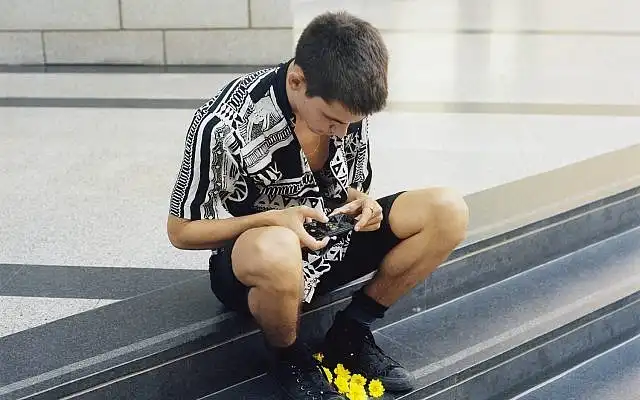
An unnamed image by Daniel Tsal (Courtesy Daniel Tsal)
Photographer Daniel Tsal never takes pictures when he’s walking down the street, even with his smartphone.
The photographer, this year’s winner of the Lauren and Mitchell Presser Photography Award for a Young Israeli Artist, which includes a $5,000 grant and a solo exhibition at the Tel Aviv Museum of Art, thinks of photography as a form of drawing, his first artistic medium, and what he initially studied at Bezalel as a student.
It was during his final year at the Fine Art Department at the Bezalel Academy of Arts and Design that Tsal turned to photography for his final project, looking for the strains of realism that photography could so easily offer.
“I really do love drawing, always,” said Tsal. “But the photography slowly took off, I draw in my photography.”
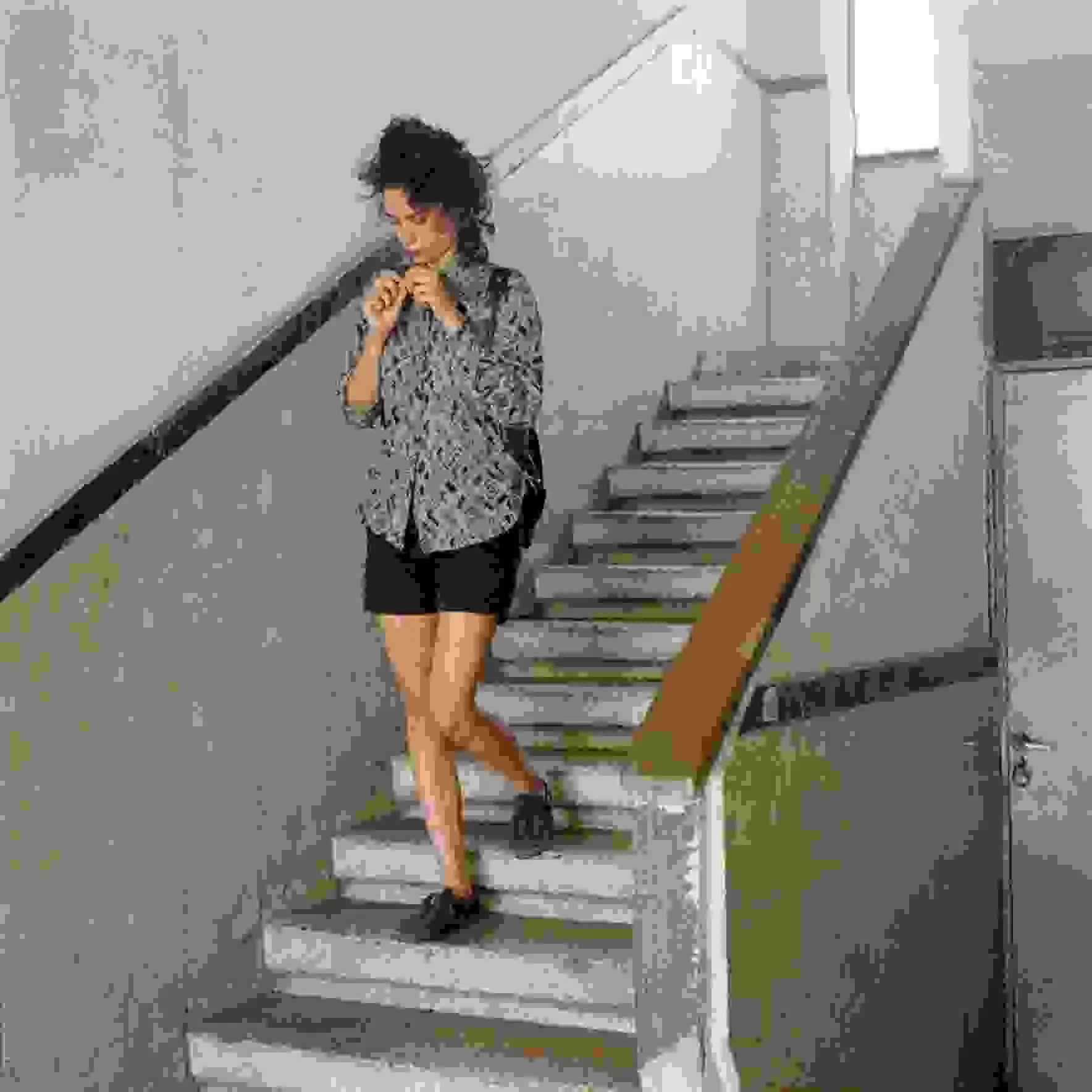
Daniel Tsal’s ‘Ella is going downstairs,’ an urban composition taken by the Tel Aviv photographer. (Courtesy Daniel Tsal)
That he does.
The judges of the prize panel noted that Tsal extricates “quiet dramas” from “mundane activities,” drawing viewers to stop and gaze at a “rich psychological range.”
These aren’t images grabbed on the go or from the scenery in Tsal’s life, but rather moments staged by Tsal, carefully planned, built, and decided upon.
“It’s the only thing that interests me,” said Tsal, who uses a Hasselblad medium format film camera.

Daniel Tsal, a photographer who turned to the medium from drawing, but still seeks that effect in his still photos. (Courtesy Daniel Tsal)
Tsal, 33, has exhibited alone and in group exhibitions in galleries in Israel and abroad. He picks his subjects with care, using models who are not necessarily his own friends, but rather from his greater network, perhaps siblings of his friends, or acquaintances in his second and third circles.
The works are often urban in nature, a sensibility and location that comes naturally to Tsal, who grew up in Tel Aviv and still lives in the city, along with frequent visits to Berlin. His models also exert that urban energy.
“I’m a man of the city,” he said. “I feel a lot of closeness to the urban experience, but there’s something to my models, who are younger than I am. I feel like they’re from another generation; I grew up without smartphones or cellphones, and I feel the difference from them, and that offers a certain amount of distance.”

Daniel Tsal’s ‘Valery peeling an egg’ is a composition in whites. (Courtesy Daniel Tsal)
The urban sensibility is apparent from the selection judged by the panel, such as “Valery peeling an egg,” a composition in whites, with Valery and her white tee-shirt, her white egg, the white wall; or “Ella is going downstairs,” in which a young woman walks down a set of stairs in a Tel Aviv apartment building, checking her necklace, readying herself to emerge outside, on the street.
“It’s almost never a series, never projects,” said Tsal. “I like the connections that aren’t clear, the photos that aren’t narratives. I don’t try to pass on a message or a story or to explain something. It’s just a movement of the body or something that’s happening.”
Tsal takes care to name the photos in order to show their personal nature, showing the small, minute gestures and movements taking place at a moment in time. He wants their identification to be more personal and specific, to draw the viewer to what’s really taking place in the picture.
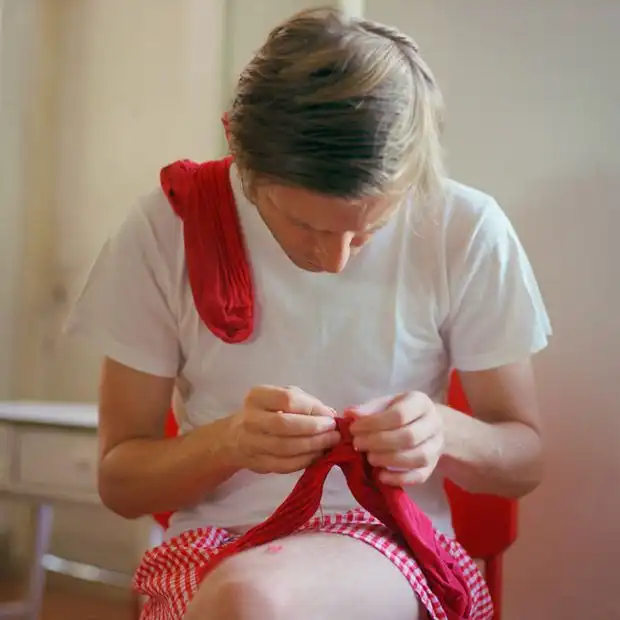
‘Darius sews,’ one of Daniel Tsal’s works that won him the Photography Award for a Young Israei Artist. (Courtesy Daniel Tsal)
“That’s what interests me, you plan it and build it and decide,” he said. “You can control what’s happening as much as possible and it brings it closer to a drawing.”