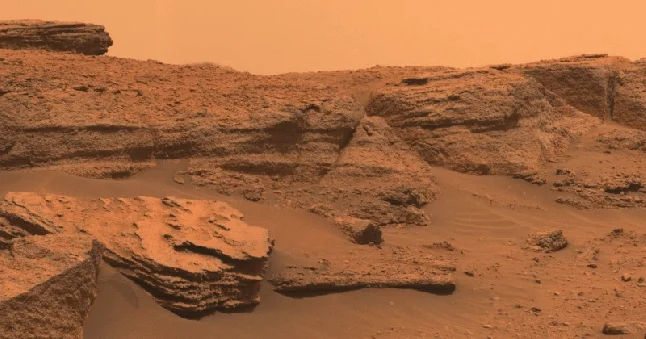
Most experts, from scientists at NASA to fervent alien enthusiasts, generally concur that if Mars ever harboured extraterrestrial life, it is unlikely to exist there now. The Red Planet is predominantly a desolate, arid expanse with a tenuous atmosphere barely capable of retaining any substantial elements, hardly suggesting a hospitable environment.
However, UFO researcher Scott C Waring is convinced that our neighbouring planet once supported a flourishing thriving civilisation, and he claims to possess "proof" to substantiate his assertion.
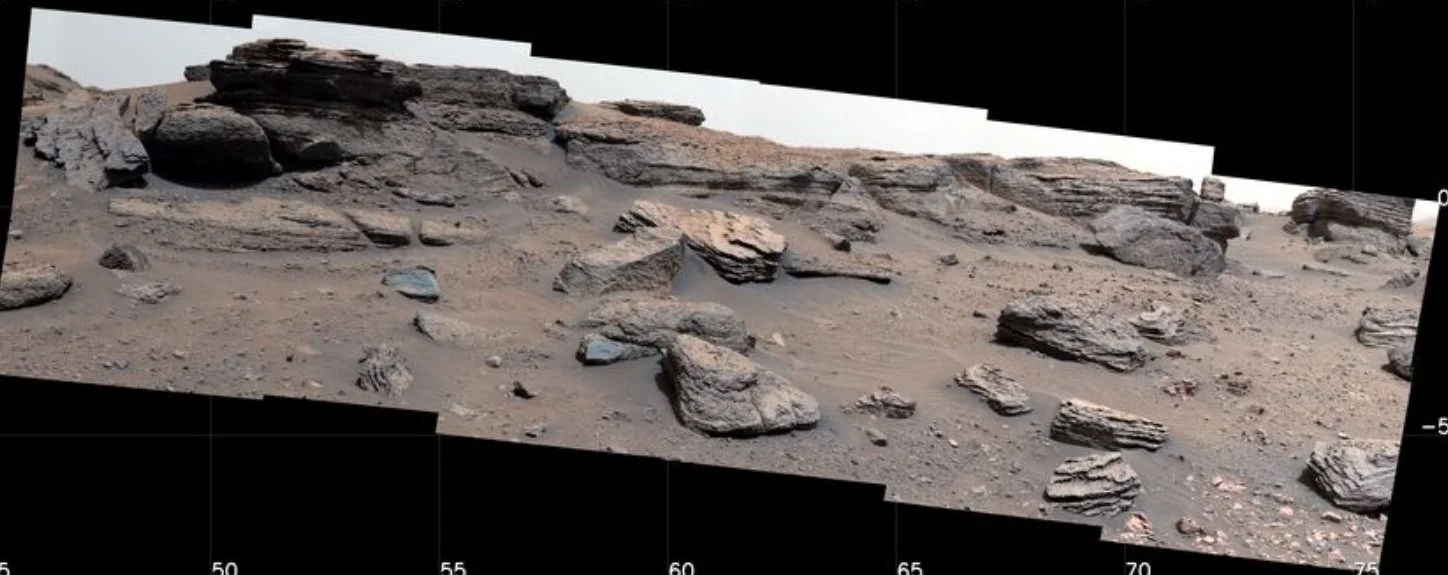
In a post on his blog, UFO Sightings Daily, last week, Waring presented photographs captured by the NASA Perseverance rover in November 2022.
Waring contends that the panoramic images distinctly show artificial structures, including what he describes as a seven-foot-tall doorway leading into an "adobe-like house." Additionally, he points to a nearby "fallen green-blue statue resembling an alien god."
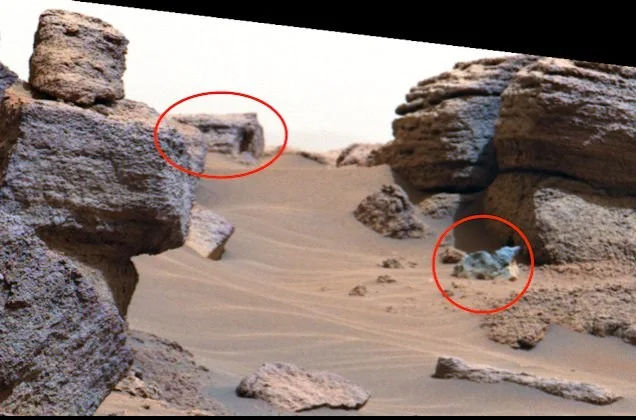
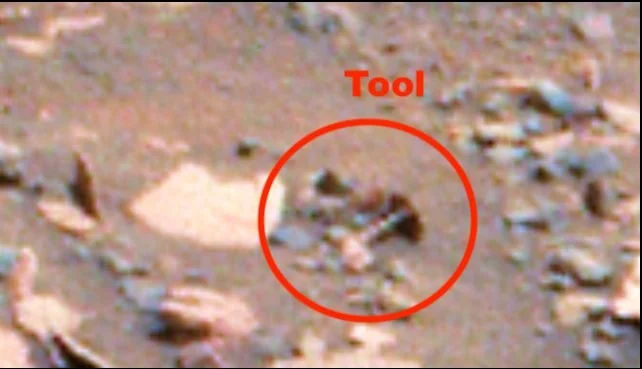
"The statue has a unique colour that appears nowhere else in this photo. Nothing around it matches its unique colouration," Waring asserted.
The images were captured around 1:30 PM "solar time" at Cape Nukshak, in close proximity to the Jezero Crater, according to NASA. This 30-mile-wide crater is believed to have once hosted one of Mars' ancient rivers during a period when the planet was considerably warmer and wetter.
At that time, some scientists theorise that Mars possessed all the necessary components for life to emerge. However, rather than advanced little grey men, it was more likely that single-cell microbes inhabited ancient Martian lakes and oceans. This is precisely why probes like Perseverance are not searching for the Martian equivalent of dinosaur fossils, but rather for rocks containing minute etchings indicative of long-extinct microbial life.
As yet, NASA has not officially declared any definitive proof of life on Mars. However, the agency announced last year that the Perseverance rover had discovered a lump of hardened mud that represented the "clearest sign of life" found to date.
Scientists believe that this specimen may contain potential biosignatures – indicators of life – in the form of minerals commonly produced by organic entities approximately 3.5 billion years ago. Some researchers even speculate that life may have persisted and continues to exist underground, shielded from the relentless bombardment of harsh space radiation.
Mark Christopher Lee, a fellow UFO researcher and filmmaker, informed Metro that while Waring's findings are intriguing, they do not constitute concrete proof of advanced life.
"Interpreting a NASA rover photo as a 'seven-foot doorway' and a 'fallen statue' is classic pareidolia – the human brain finding familiar shapes in random rocks," Lee explained. "Nasa has released the original image; it shows geological features, not architecture. Claims of this kind have appeared for decades and have never held up under proper analysis."
Nevertheless, Lee maintains that this does not preclude the possibility of some form of "proof" emerging in the future. He aligns with scientific theories suggesting that otherworldly life might have "seeded" Earth, potentially by hitching a ride on Martian meteorites.
"Those are legitimate lines of inquiry," Lee added. "A doorway in a single low-resolution frame is not evidence for any of them."